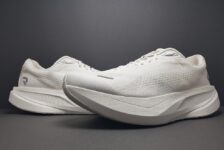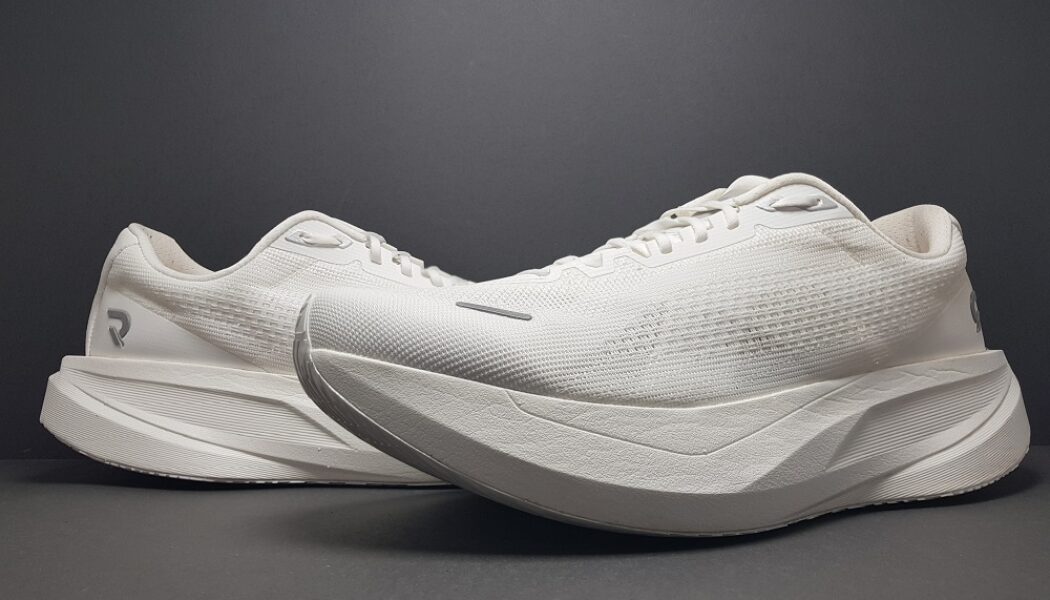
Category: Super Trainer
Stack height: 41/34mm
Weight: 195g
The story of Dynafish is a rather unusual one. Unconventional and certainly very interesting. Above all, it shows that believing in a vision can help overcome even the greatest difficulties.
The company’s two founders started in 2024 with less than €1,500 in capital, according to what they say. Interestingly, their first move was not to design a shoe but to create a running community. This allowed them to connect with their future audience and gather the feedback they needed. What happened next was also unexpected. Just a few days before the launch of their first shoe, the factory which was responsible for the production announced that it could not complete the order. The small Dynafish team had to find a new factory in another city within a very short period of time, move the unfinished products and reorganize the production from the start.
And they did it. The initial batch of their first model sold out within minutes. The Danian 1.0 was a 157g racer featuring a super foam, showing that Dynafish was aiming to stand out from day one.
In 2025, the company introduced the Xiaonian, and it proved to be a turning point for Dynafish. The model quickly attracted attention in the Chinese market and then, almost entirely through word of mouth, crossed the country’s borders. Reviews and reports from around the world began comparing the Xiaonian with well-known models from established brands. And just like that, a small brand that started with only two people and a very small amount of capital, found itself within two years competing for the attention of the global market.
The question now is no longer whether Dynafish can make a good running shoe, but just how good the Xiaonian actually is.
Upper and fit
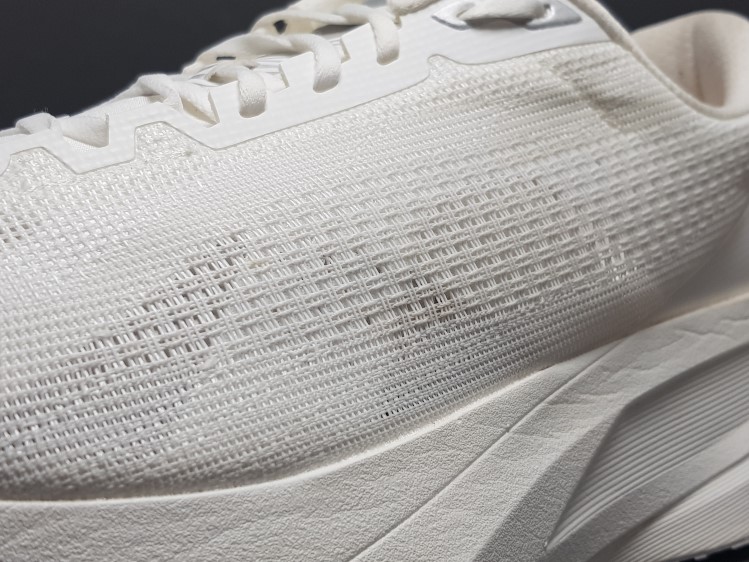
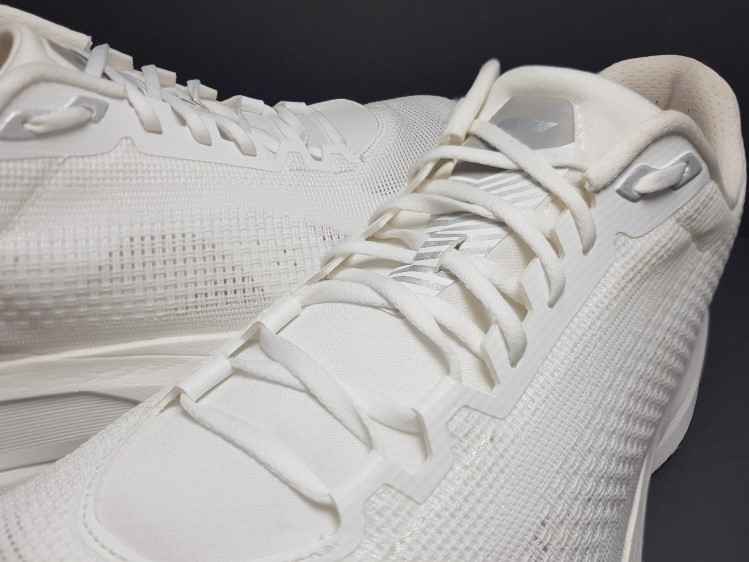
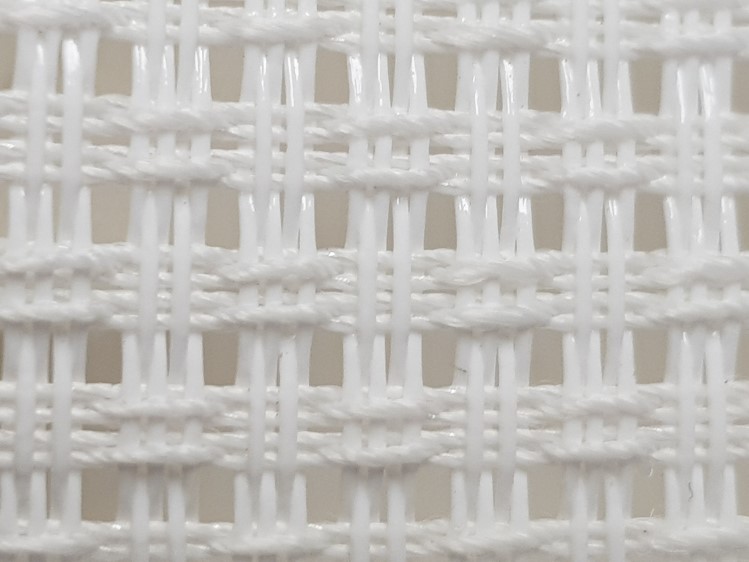
The Xiaonian’s fabric is extremely thin but the vertical yarns appear to have a kind of “plastic” coating, giving the construction a distinctive degree of rigidity. Different density zones and a very open weave provide excellent breathability, together with a relatively stiff toe bumper.
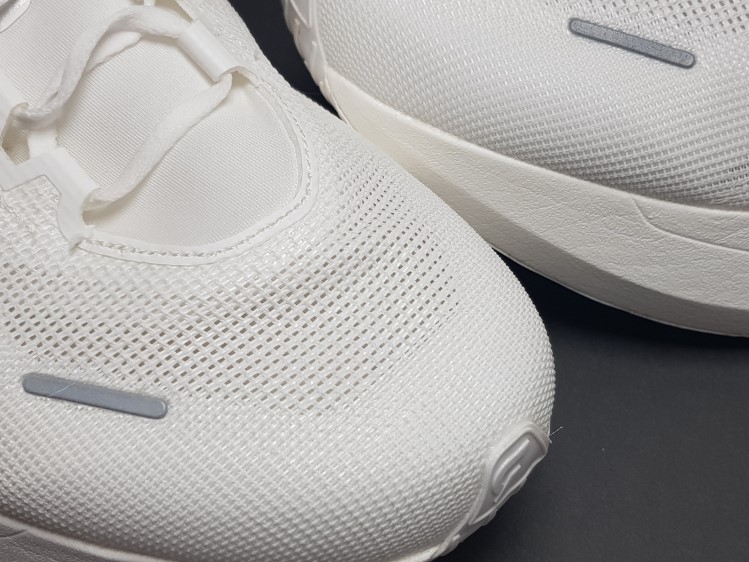
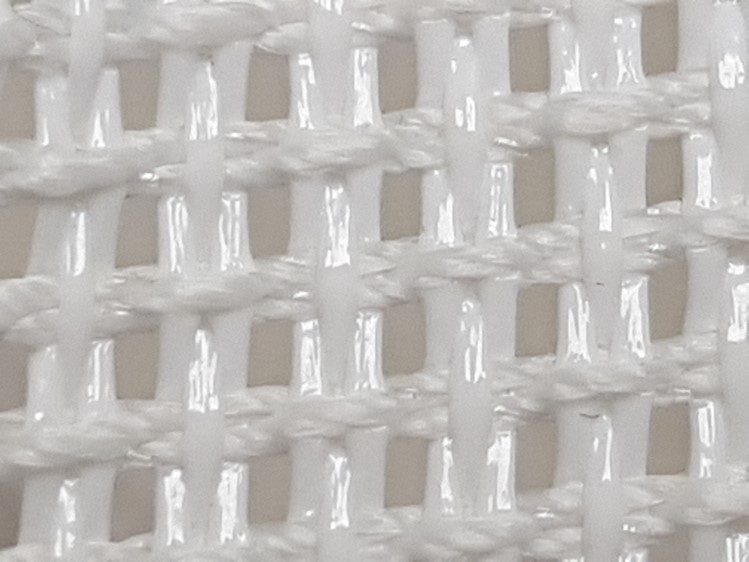
The mesh combines low weight and breathability with structural rigidity.
The structured mesh is reinforced through the midfoot by large underlays. The tongue is made from a very soft and stretchy material and, despite being completely unpadded, feels very comfortable over the foot.
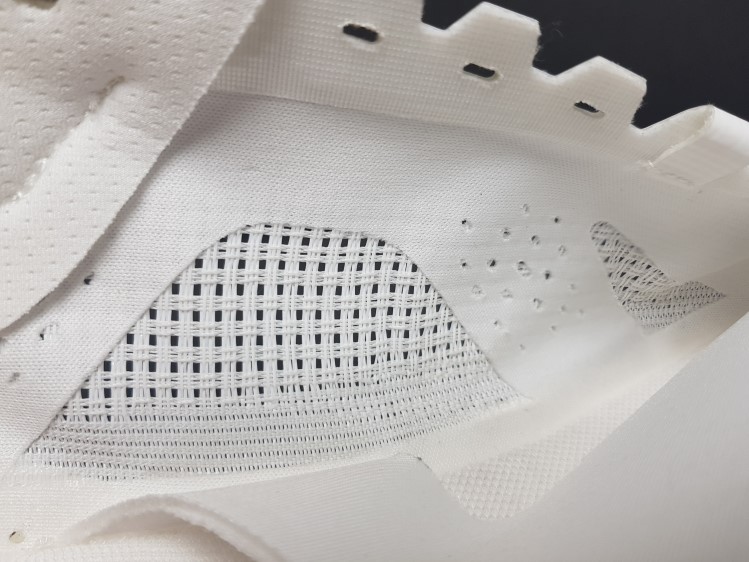
Internal fabric panels provide additional support around the midfoot.
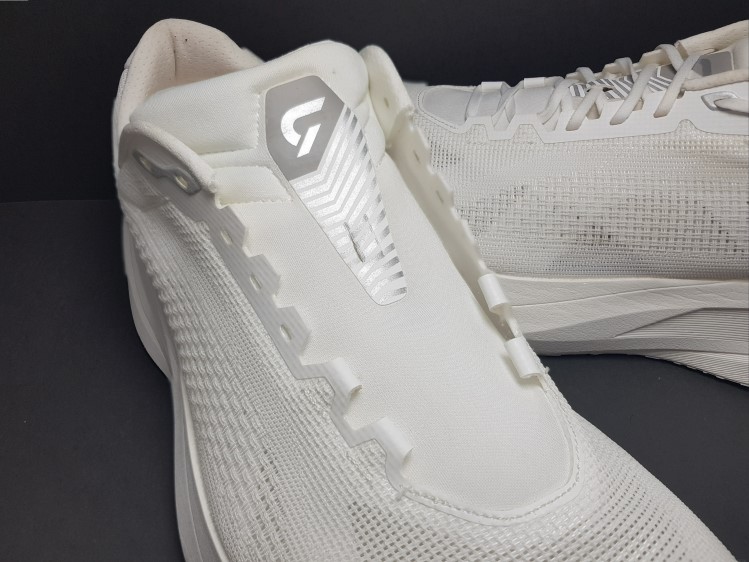
Minimal padding is used only at the upper edge.
There is very little structure around the rear, with a flexible collar but adequate foam padding.
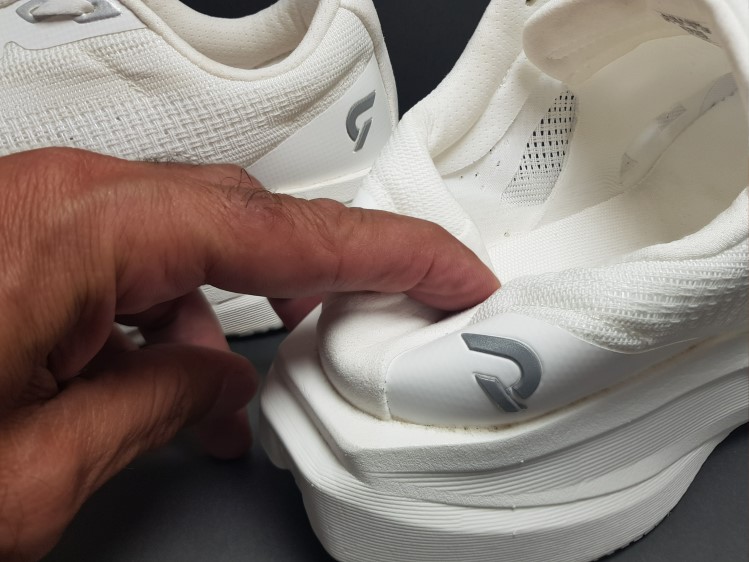
Race-oriented collar…
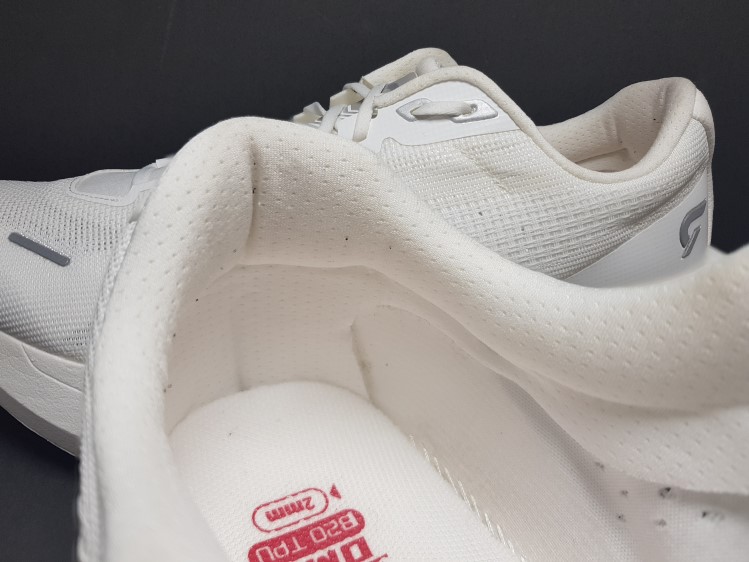
…training-oriented padding.
The Xiaonian has a fairly wide fit, particularly in the forefoot. The structured upper and toe bumper hold the shape of the toe box, meaning you cannot really cinch down its width with the laces. Add to that the unusually low starting point of the tongue and there is even more room up front. If you have a wide foot, the fit is ideal. Otherwise, you will have to rely on the rest of the upper to provide the necessary lockdown.
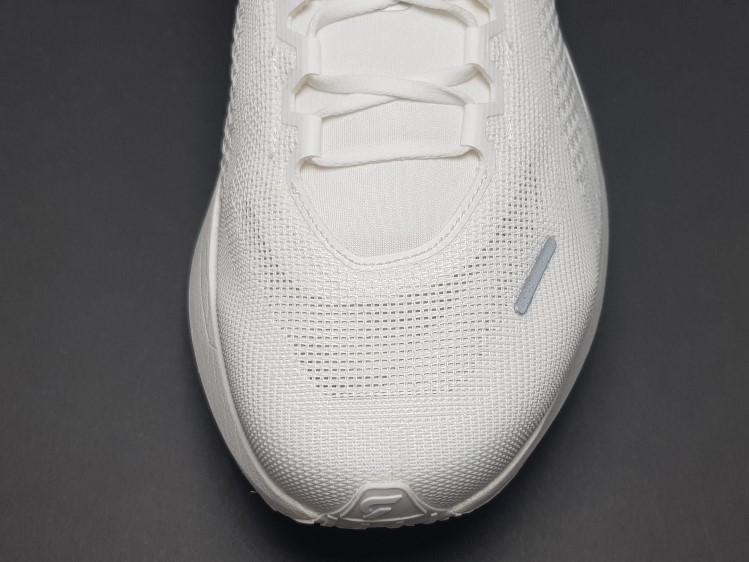
Very comfortable fit across the metatarsals and around the toes.
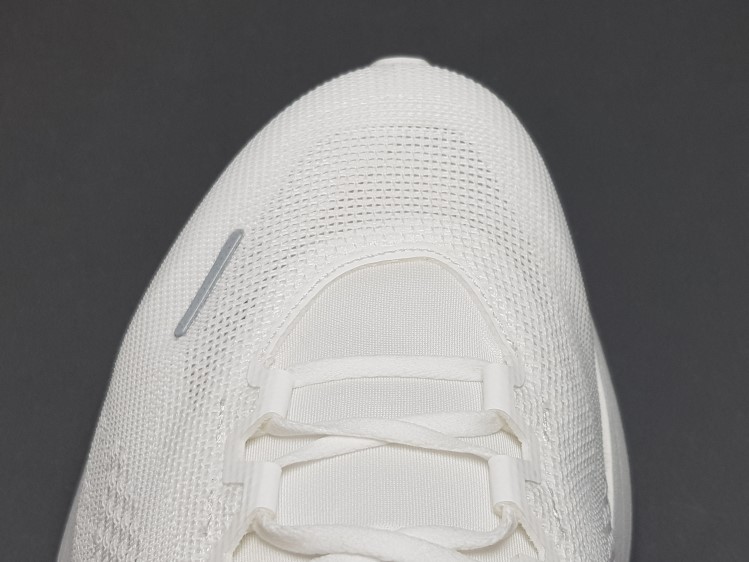
The tongue extends far ahead of the first row of eyelets.
The midfoot, although spacious as well, easily conforms to your foot and wraps around it properly. The structural elements and non-stretch fabric provide very good lockdown, while the tongue offers more comfort than you would expect.
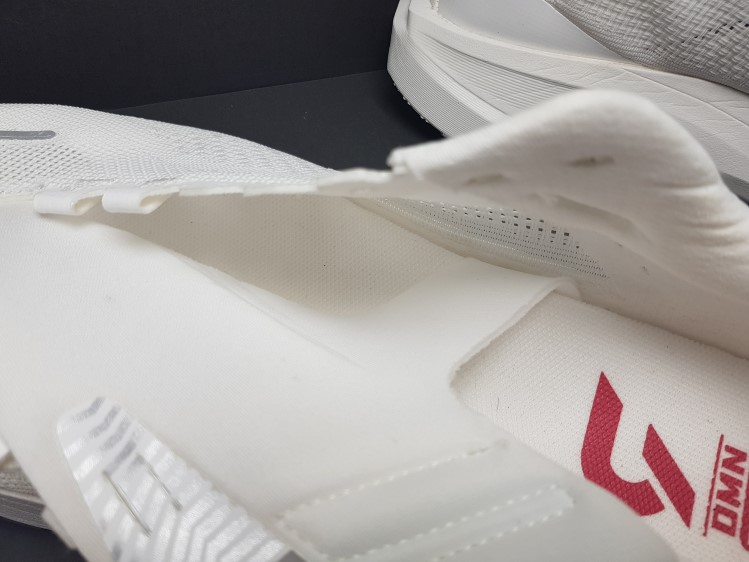
Semi gusseted tongue.
However, there is one prerequisite: replace the laces. They are thin, narrow and excessively long. They neither maintain their initial tension nor help secure the foot properly. I replaced them with wider, toothed laces and the fit improved dramatically.
The heel is well designed, with a soft collar that follows the shape of the heel bone and enough foam to create a comfortable environment. There is no foot movement and the overall feel is remarkably light.
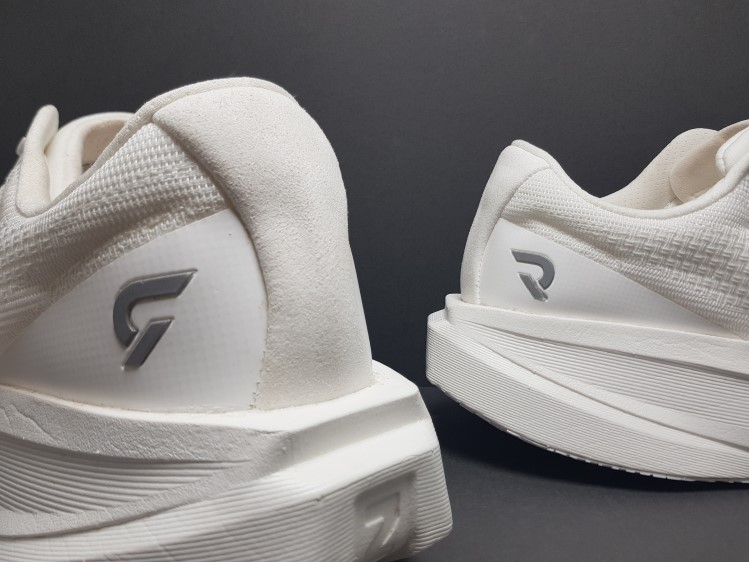
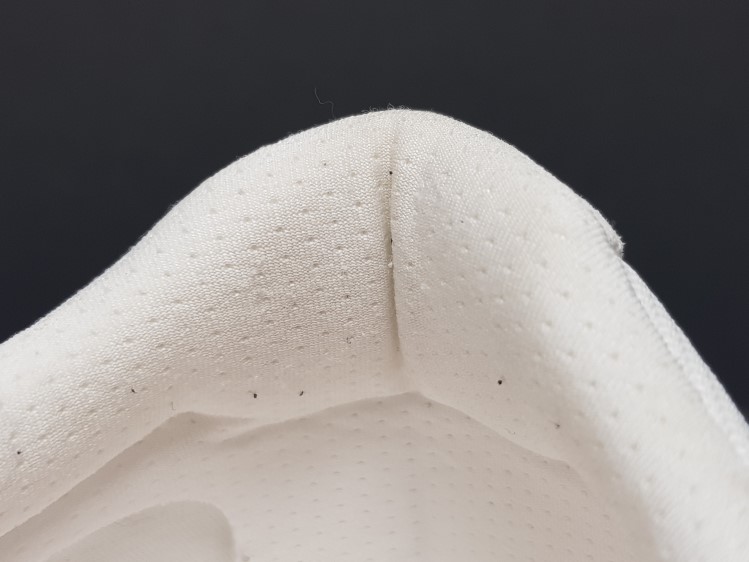
Despite its lightweight construction, there’s still plenty of foam padding.
I have a relatively narrow foot, so the spaciousness of the Dynafish initially concerned me. Nevertheless, the fit through the midfoot and rear manages to control the wide toe box, ultimately keeping the foot secure and centered. It is completely trouble-free on long runs, as expected, but even at faster paces you never feel like you are floating around inside the shoe. Overall, it inspires a lot of confidence. The sturdy fabric helps considerably as well. All of this of course, always wearing a thick sock. On the other hand, runners with a more substantial foot, who often find themselves squeezed into narrower performance models, will find a perfect last here.
Breathability is excellent, having tested the shoe in conditions of high heat and humidity. Hardly surprising, given how open the mesh is.
As for sizing, the shoe is absolutely true to length. So don’t let the wide fit tempt you to size down. It will be too short.
Midsole and ride
Dynafish uses a supercritical TPEE compound for the Xiaonian’s midsole. It belongs to a family of materials found in many modern super shoes.
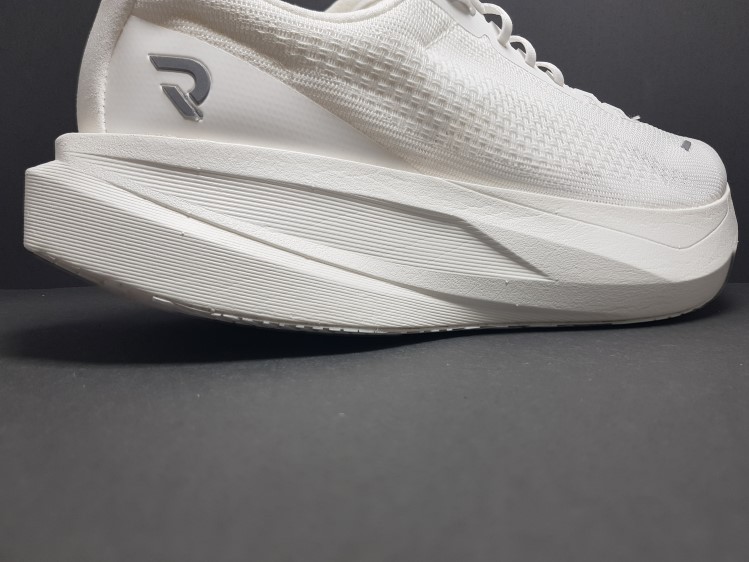
A large, single piece slab of TPEE and nothing else.
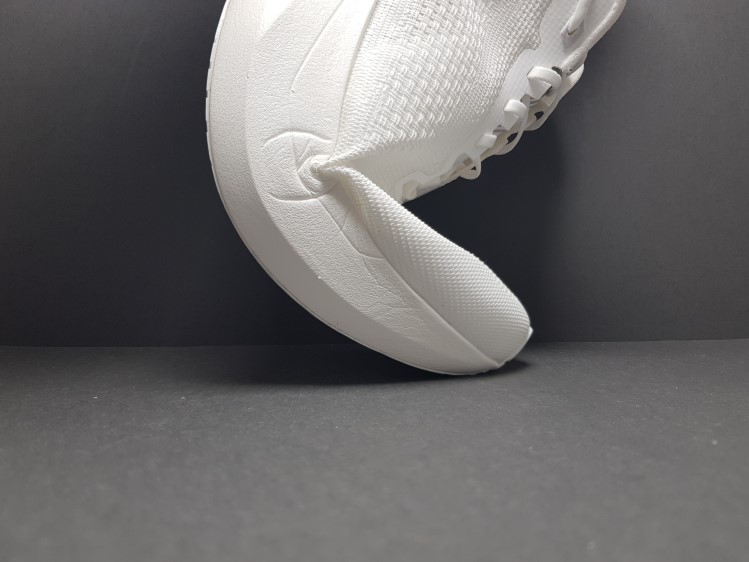
The choice of foam is undoubtedly important in a shoe, but here the real difference comes from the geometry of the platform. The rocker starts very early in the forefoot, it’s long and ends with a quite pronounced angle. The same applies to the heel, where almost the entire rear section does not actually touch the ground.
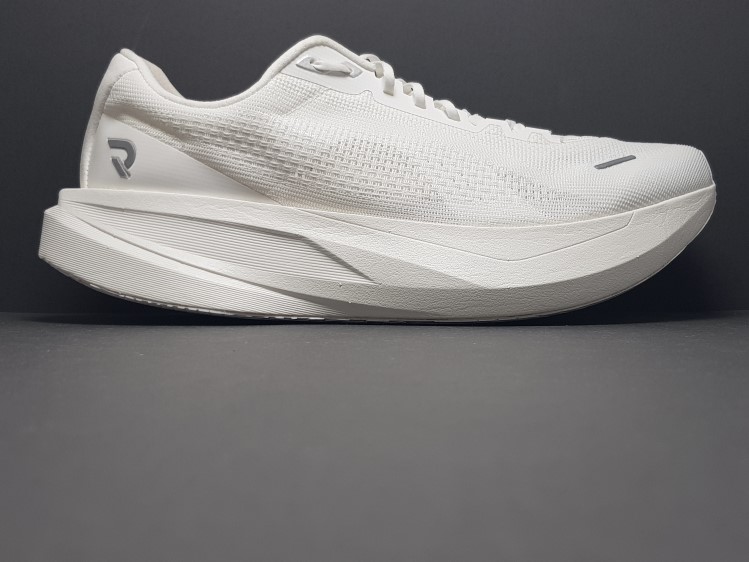
“Rocker” means “rocking chair” and the design here fully justifies the metaphorical use of the term.
For the angle to work properly however, it also needs to be maintained. So, despite the absence of any plate, the forefoot is quite stiff. Not completely rigid, but stiff enough to support the geometry.
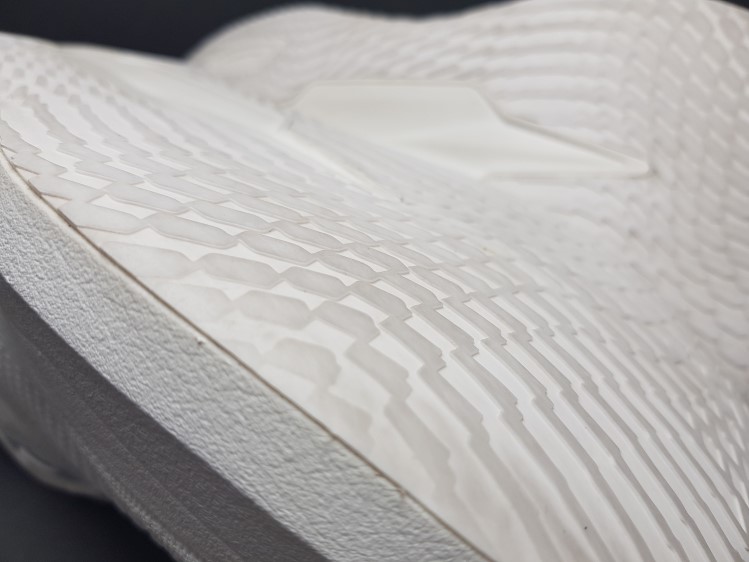
The outsole is almost entirely covered by a thin layer of CPU. This is a polyurethane compound rather than conventional rubber, making it lighter and more durable. Most Chinese brands use it in their models. Since last year, Adidas has also replaced its well-known Continental rubber with CPU. That alone says a lot.
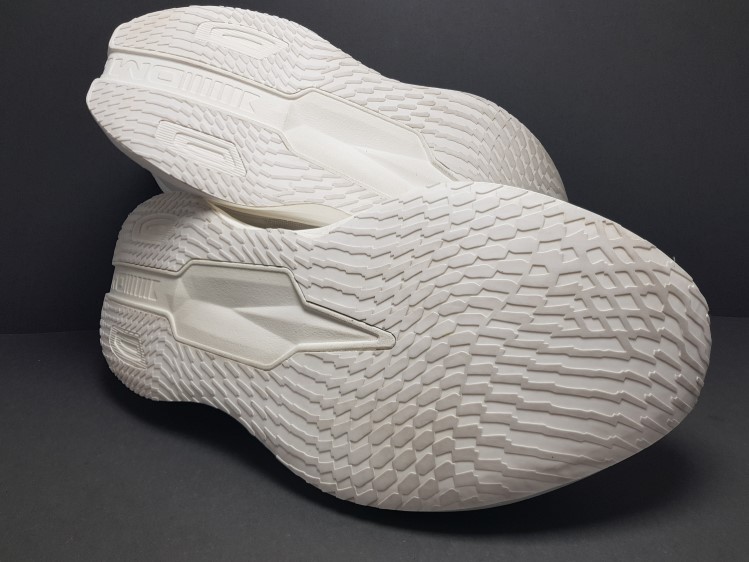
No compromises when it comes to underfoot coverage, unlike most super trainers.
Grip was good across all surfaces, although I have not tested it in wet conditions. The material is soft and quiet, working together with the foam rather than muting it. After 90 km, there is no visible wear or smoothing of the outsole.
In terms of ride, the Xiaonian is soft, yet at the same time balanced and substantial. Very sweet, secure and with controlled compression. The foam never bottoms out and you always feel there is more left. As a point of reference, its behavior is very reminiscent of Lightstrike Pro (possibly even the same compound), although its tuning sits somewhere between the previous generation (Adios Pro 3, Evo SL) and the new one (Adios Pro 4).
The level of protection is even greater than you would expect from its stack height, which is largely down to the platform geometry. The 41/34mm measurements are taken at points where the sole is actually off the ground because of the pronounced rocker at both ends. Slightly before or after those points, where the sole actually contacts the ground, there are another 2–3mm.
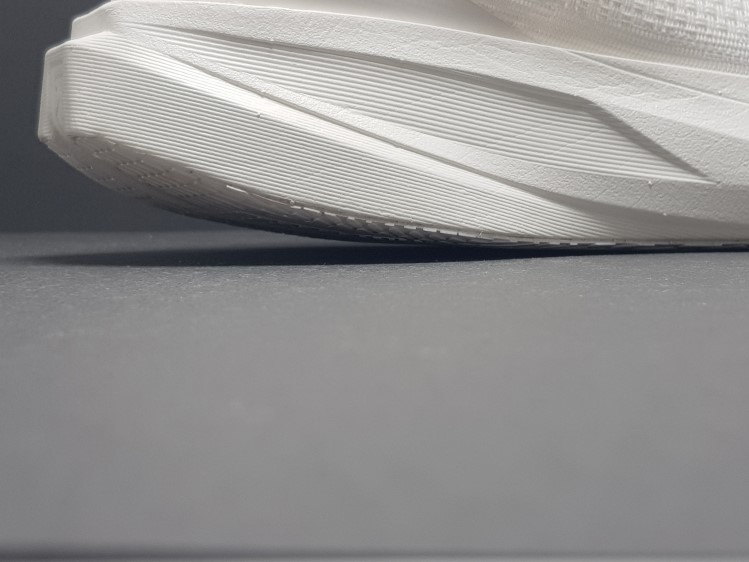
The stack measurement and contact points are at least 3 cm apart.
As for the foam’s elasticity, although energy-return testing machines have showed very high nimbers, I would not describe the on road sensation as obviously bouncy. To avoid any misunderstanding, decompression is immediate and effortless, getting you quickly out of the foam. What it does not have is that pronounced rebound that makes you feel like you are bouncing along the road. It is more toned down and solid.
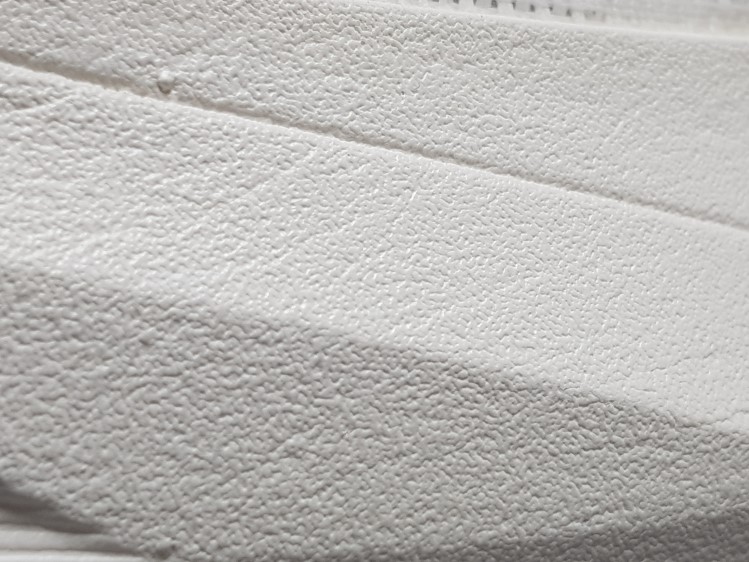
So what is it that ultimately makes it so appealing and efficient?
The Xiaonian does not have a single feature that immediately stands out or impresses, but it is one of those cases where “the whole is greater than the sum of its parts.” It may well be the smoothest shoe I have ever worn.
But what does smooth actually mean? It means an easy, effortless, fluid and natural ride. The shoe has a roll and a flow that makes you feel as if it is literally carrying you forward on its own. Exceptionally well balanced in every component, with exactly the right dosage for everything to work together like a finely tuned machine.
The rocker geometry seems almost ideal. It does not has the feeling of propulsion or the explosiveness you get from more aggressive constructions, but rather that of a continuous rolling, making the transition incredibly smooth and rhythmic. Almost as if you were gliding on ice (that’s what smooth means, I finally found it!). It works perfectly with the partial stiffness of the sole, ultimately accommodating almost any running form. That’s why I believe everyone will be able to get the best out of it.
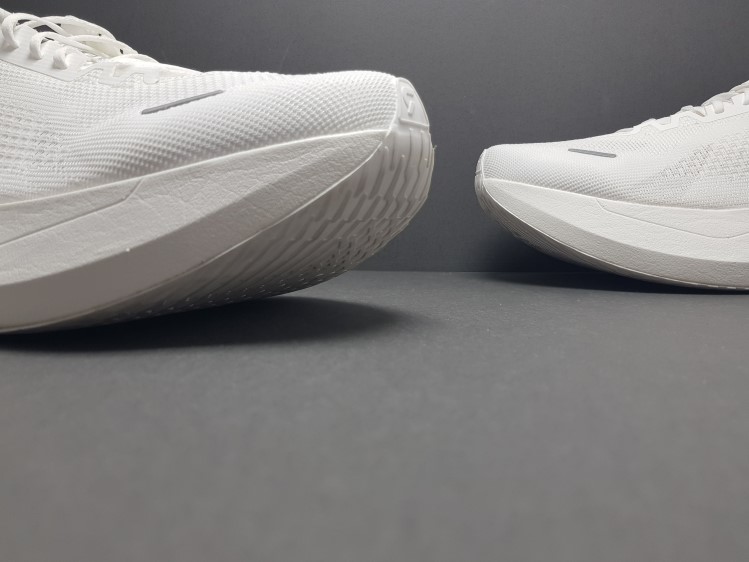
The really nice thing though, is that this efficiency works almost in the background. The Xiaonian is not one of those shoes that throws its features in your face. Instead, it works quietly and discreetly. The transition is so smooth that you often realize only afterwards that you are running faster than you thought. It does not push you to run fast, it simply makes it easier to do so. And it also has the ability to change pace without changing its character.
Continuing from that last point, the Dynafish has a very wide pace range. It has no problem being “dragged” through very slow paces, providing the cushioning and comfort you want from a daily trainer.
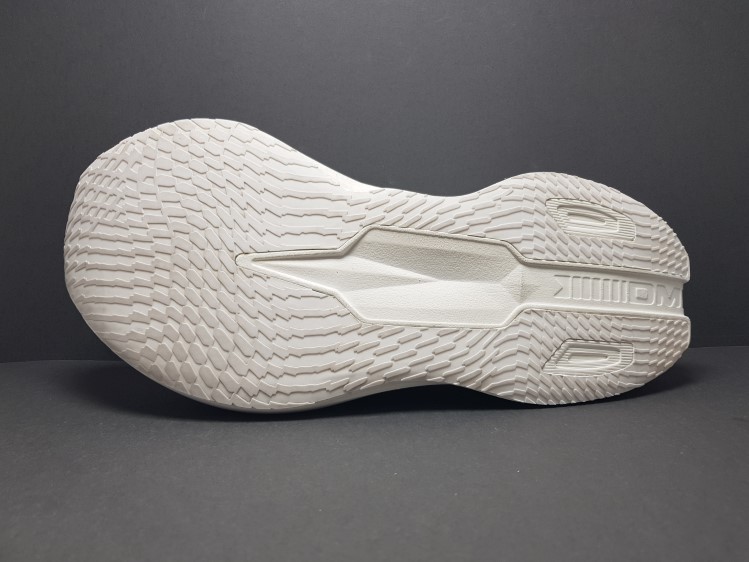
The wide base provides plenty of support for easy paced runs.
From there, it can just as easily move considerably faster. The dense softness provides a degree of responsiveness in the forefoot despite the 34+mm stack, handling the extra force you put into it without hesitation. The large footprint of the sole helps here, providing a stable platform for toe-off, as does its reduced flexibility.
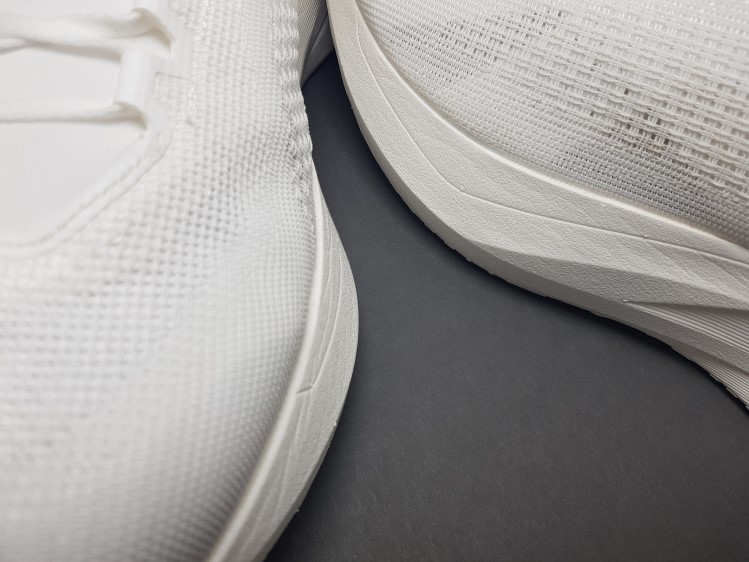
The geometry of the sidewalls allows you to transfer power to the road.
For me, its limit is somewhere around threshold pace, where it can carry you smoothly and effortlessly even through prolonged efforts. Directness and quick turnover. It hides its bulk, it’s easy to control and does not require you to alter your mechanics in order to accelerate. Very friendly at all paces. It certainly lacks the aggressiveness of more specialized, stiff constructions, but we cannot, nor should we, run in carbon-plated shoes all the time. Its ideal training use, in my view, is long runs at race pace.
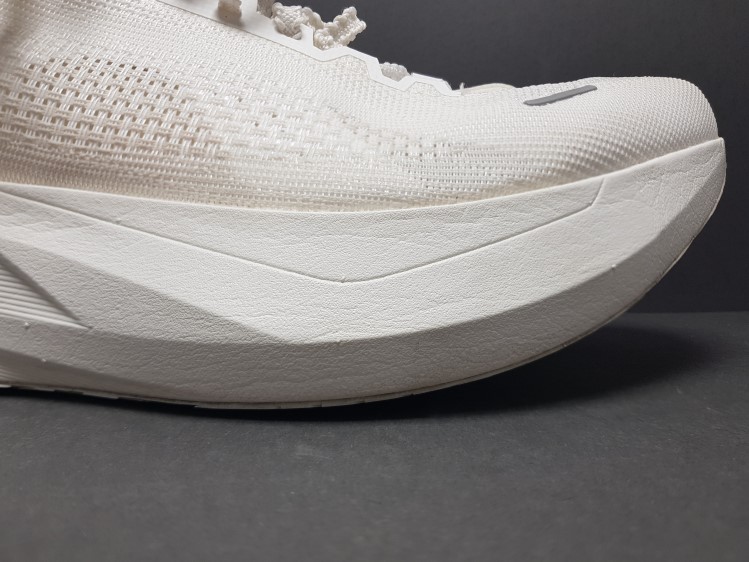
Two additional characteristics of the Xiaonian also contribute to all of the above. The first is its weight. We are talking about a model with around 44mm of stack that weighs under 200 grams. And it achieves this without using an excessively airy foam, limited outsole coverage, cutouts, voids or any of the other tricks usually employed to reduce weight. Honestly, I have no idea how they managed this at Dynafish.
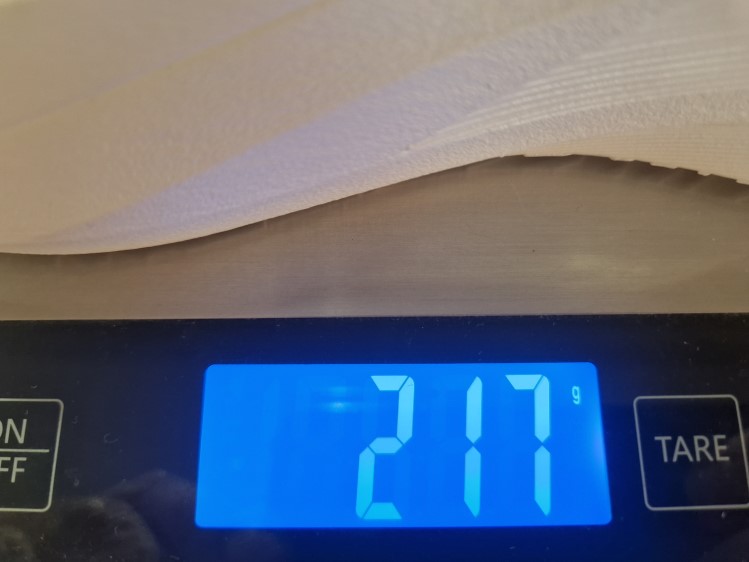
Sz EU45/ US11
The second defining characteristic of the shoe is stability. In addition to the denser foam tuning, which gives the sole torsional rigidity, the foot sits on a very wide platform. There is substantial flare at both the front and rear, together with a full arch. Nevertheless, on the road its dimensions feel more compact and do not compromise its liveliness.
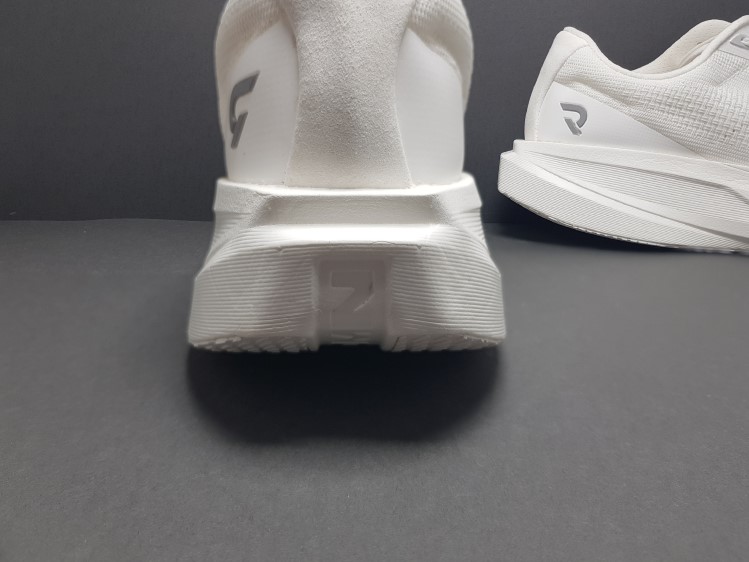
A sufficiently wide heel platform, with the sidewalls flaring outward.
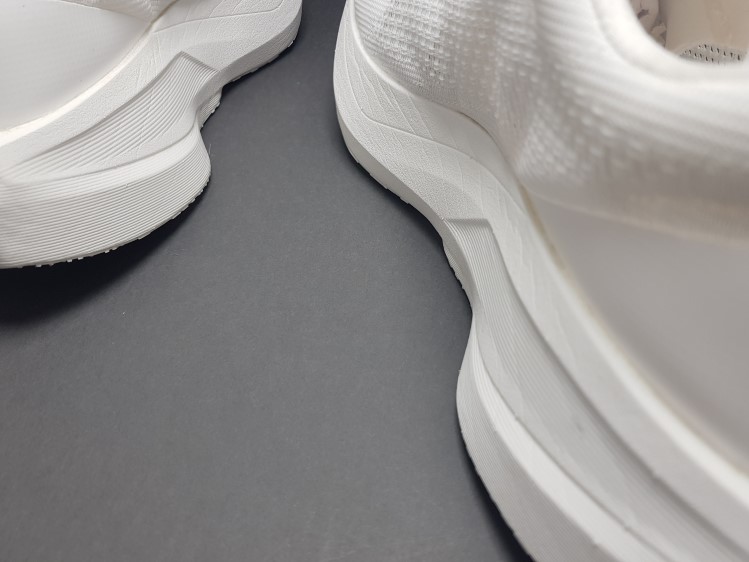
The arch isn’t narrow. The sole is simply hourglass shaped.
The Xiaonian is one of the best marathon/half-marathon options for the recreational runner who does not want (or does not need) the uncompromising character of a super shoe. It gives you the predictability and friendliness of a trainer, the weight of a racer and enough speed if you are able to make use of it.
Conclusion
I can easily imagine someone trying the Xiaonian for the first time and wondering what all the fuss is about. Looking for something that makes an obvious difference, only to find that there is no single feature that does. That, however, is precisely where the essence of the shoe lies. It does not shout about how good it is, nor does it try to grab your attention at every opportunity. It simply lets you run in it and discover it by yourself, run after run.
For many established brands, a shoe like the Xiaonian could easily be the 3rd, 4th or even 5th generation of a product that has evolved gradually through successive improvements. For Dynafish however, the Xiaonian is only the starting point. And the fact that a company can reach such a complete result with its very first attempt says a lot in itself. At the same time, it sets the bar high for whatever comes next.